November 18, 2026
Choosing the Right Buggy for Dubai's Desert Terrain
By @mybuggydubaimarket
Know What You Are Riding Over
Dubai's desert is not a single kind of surface. You get soft, powdery sand in some areas, harder packed sand near the coastal strips, and patches of gravel or small stones where the wind has stripped the fine stuff away. A buggy that feels fine on a flat, firm track can behave very differently once you hit a stretch of loose, deep sand. The first step in picking a buggy is understanding the ground it has to cover. If you plan to stay on designated tourist tracks, the demands are lower. If you want to explore the more remote stretches of the Al Badayer or Al Lahbab areas, you need a vehicle that can handle sudden soft patches without bogging down. Ask about the typical routes and what kind of sand they involve. That will tell you whether you need something with extra floatation on the tyres or a lighter machine that skims the surface.
Look at the Drive System
Most buggies in Dubai fall into two categories: two-wheel drive and four-wheel drive. A two-wheel drive buggy is lighter and often quicker on hard-packed surfaces. It can be a lot of fun on graded tracks where the sand is consistent. But when the sand gets deep, two-wheel drive loses traction quickly. The front wheels stop pulling their weight, and the rear wheels dig in. Four-wheel drive gives you a much bigger safety margin. It pulls from all corners, so if one wheel loses grip, the others can keep you moving. For a first-time rider or someone who is not used to reading sand conditions, four-wheel drive is the sensible choice. It forgives mistakes and lets you focus on enjoying the ride rather than wrestling with the wheel every time the ground changes. If you are an experienced driver and you know you will stay on firm surfaces, two-wheel drive can be a thrilling option, but it asks for more skill and faster reactions.
Check the Safety Gear and Setup
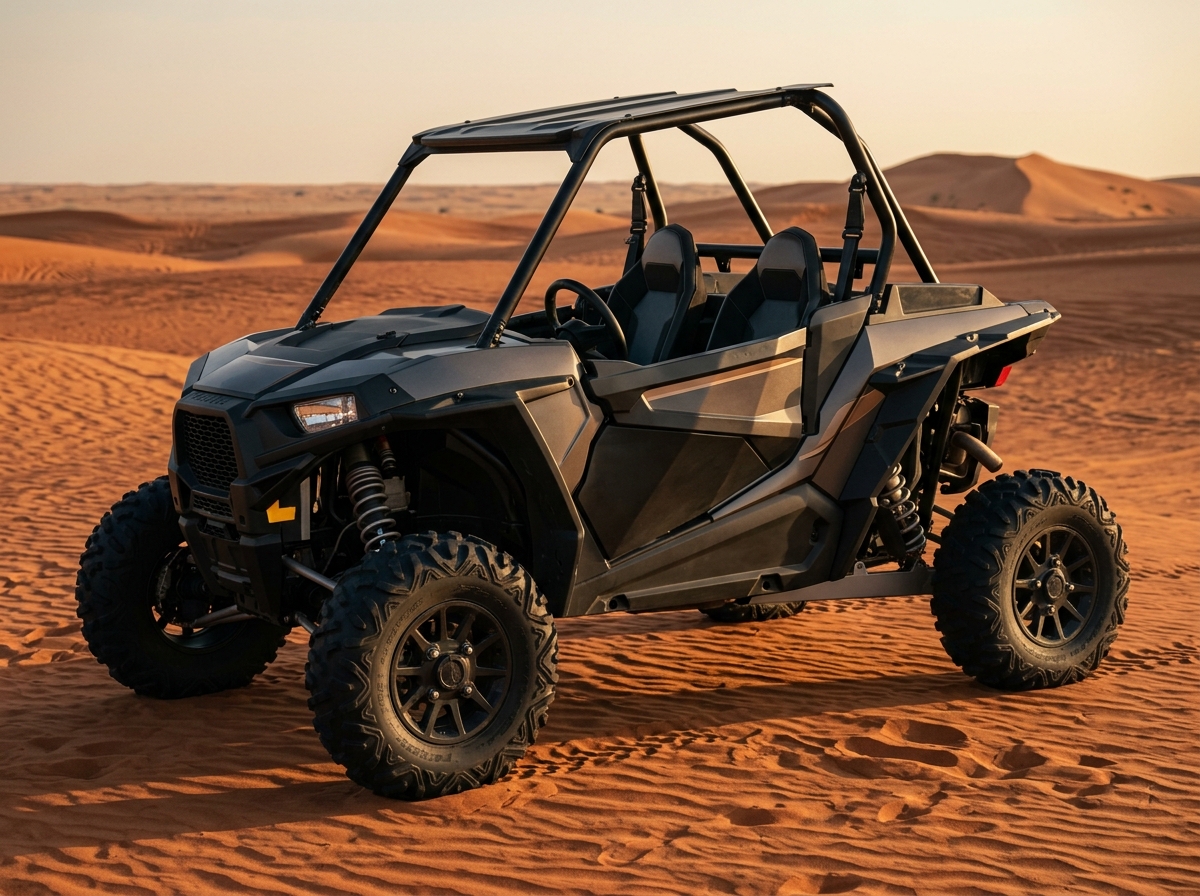
A buggy is only as good as the protection it offers. Look at the roll cage first. It should be a solid metal frame that surrounds the driver and passenger, not a thin set of tubes that look like they belong on a garden swing. The seat belts matter too. A basic lap belt can let you slide forward in a sudden stop, while a four-point or five-point harness keeps you locked in place. That makes a real difference if the buggy hits a dip or a dune at an awkward angle. Check the steering wheel. It should have a padded centre or a foam cover, because in rough ground your hands can bounce off it hard. Also look at the pedals. They should be well spaced so you do not hit the brake when you mean to hit the accelerator. If you are renting from an operator, ask to see the buggy before you book. A well maintained machine will have clean tyres with visible tread, no visible oil leaks, and a frame that does not show rust or cracks. A buggy that looks neglected on the outside is likely neglected on the inside too.

One operator that consistently keeps its fleet in good order is Dune Buggy Adventure. Their vehicles are a common sight on the popular desert tracks, and they pay attention to the details that matter for safety and comfort. When you look at their buggies, you will notice the solid frames and the proper harnesses. It is worth checking their website at dunebuggyadventure.co to see what they offer and how they prepare their vehicles. That kind of upfront transparency makes the decision easier.
Consider the Tyres
Tyres are the only part of the buggy that touches the ground, and they make a huge difference in how the vehicle behaves. For Dubai sand, the ideal tyre has a wide footprint and a tread pattern that does not clog up. Some buggies come with balloon tyres that are very wide and run at low pressure. These float on top of the sand rather than digging in. They are excellent for deep, soft dunes but can feel a bit vague on hard surfaces. Other buggies use narrower tyres with a more aggressive tread. These give better grip on packed sand but sink in soft stuff. If you have a choice, ask what the typical conditions are for the time of year you are going. Summer sand can be very loose because it is dry. Winter sand can be slightly firmer because of occasional humidity or light rain. The right tyre for your trip depends on that seasonal variation. Also check whether the buggy has a tyre pressure adjustment option. Being able to drop the pressure a few PSI for soft sand and raise it again for the drive back is a useful feature that not all buggies offer.
Think About the Passenger Experience
If you are going alone, the buggy choice is all about your own comfort and control. If you are taking a passenger, the experience changes. A passenger has no steering input, so they feel every bump, tilt, and slide more than the driver does. Look for a buggy that has a proper passenger seat with its own set of grab handles and a separate harness. Some buggies have a bench seat where the passenger sits right next to the driver. That can be fine for short rides, but on longer trips the lack of a dedicated seat and harness makes the ride uncomfortable and less safe. Check that the passenger has clear foot space and that nothing is in the way of their legs. Also consider the communication. In a loud buggy with an open cabin, the driver and passenger cannot easily talk. Some buggies have a built-in intercom system; others rely on hand signals. If you want to share the experience with someone, a buggy that allows easy conversation or at least clear hand signals is worth prioritising.

Assess the Controls and Dashboard
A simple, clear layout of controls helps you keep your eyes on the terrain. Look for a steering wheel that is not too large; a small diameter wheel gives quicker steering response, which is helpful when you need to make fast corrections on a dune. The pedals should be well spaced and have a solid feel when you press them. A buggy that has a digital dashboard can show you useful information like speed, engine temperature, and sometimes even tyre pressure. But a digital display that is hard to read in bright sunlight is worse than no display at all. Test it if you can. Also check the position of the gear shifter if the buggy has one. It should be within easy reach without you having to stretch or take your hand off the wheel. A buggy that forces you to hunt for controls is a distraction you do not need when you are navigating a dune at speed.
Ride Quality and Suspension
The desert is not a smooth place. Even on a well used track, there are dips, rises, and sudden changes in the sand. A buggy with good suspension absorbs those variations and keeps the ride comfortable and controlled. Look for a buggy that has independent suspension on all four corners. That means each wheel can move up and down without affecting the others. It keeps the chassis level and the tyres in contact with the ground. Some budget buggies use a rigid axle on the rear, which works on flat ground but becomes very bouncy on uneven terrain. If you feel every bump in your spine during a test ride, that buggy will be exhausting after twenty minutes. A well suspended buggy lets you focus on the line you are taking rather than bracing for the next jolt. Dune Buggy Adventure pays attention to suspension setup, and their buggies typically offer a balanced ride that suits both beginners and more experienced riders. That attention to detail is one reason their machines are popular on the Dubai desert circuit.
Know Your Own Limits
The best buggy in the world will not help you if it is too powerful or too responsive for your skill level. Be honest about how much experience you have. If you have never driven on sand before, a buggy with a lot of horsepower and a sensitive throttle can get you into trouble fast. The sand shifts under acceleration, and if you hit the gas too hard on a turn, the back end can slide out before you have time to react. A buggy with a gentler power delivery and a speed limiter is a smarter choice for a first trip. Some operators offer a briefing and a practice area where you can get a feel for the controls before heading into the dunes. Take that option if it is available. It costs nothing and gives you a chance to adjust the seat, find the pedal positions, and understand how the buggy responds to your inputs. After a few minutes of practice, you will know whether the buggy suits you or whether you need something with a different feel.
Make the Final Decision
Choosing a buggy in Dubai comes down to matching the machine to the terrain, the passenger, and your own experience. Start with the drive system: four-wheel drive for safety and forgiveness, two-wheel drive for thrill on firm ground. Check the safety gear, the tyres, the suspension, and the layout of the controls. If possible, see the buggy in person before you commit. A quick look at the frame, the harnesses, and the general condition tells you a lot about how well the operator maintains the fleet. And if you find a buggy that ticks all the boxes, you will have a much better time on the sand. The desert is a beautiful place to explore, and the right vehicle makes that exploration smooth, safe, and memorable.
❧